

This post is also available in:
 Nederlands
© Photo: Stock-Asso / Shutterstock.com
It was the ultimate promise of the AI revolution: feed your company data into a Large Language Model (LLM) and you will no longer need expensive specialists. The software will provide the answers. Yet by 2026, we are increasingly seeing the downside of that rationalisation. Organisations that have cut their human expertise in favour of algorithmic efficiency are finding themselves trapped in a quagmire of mediocrity. The paradox of this era? The smarter the technology, the more crucial – and scarcer – the human factor becomes.
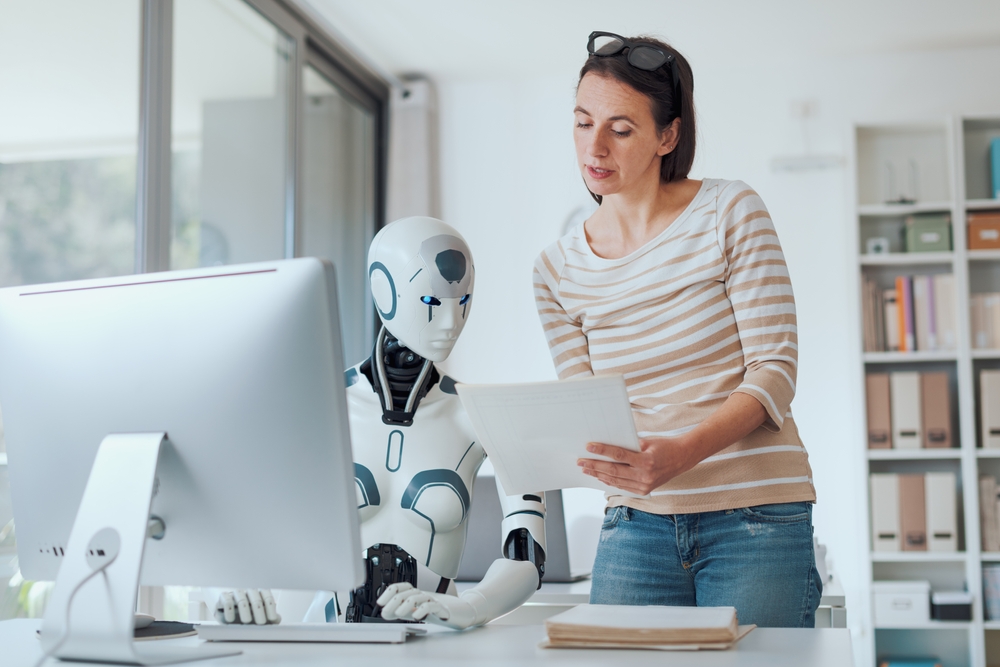
In this context, management scientists also speak of a modern revival of the Paradox of Automation: the more advanced the computer system, the more crucial the human expert becomes to catch subtle errors and hallucinations. Organisations that have cut out the ‘human-in-the-loop’ are now discovering the harsh reality of algorithmic erosion.
If you ask an AI search engine a question today, you receive a fluent, structured answer immediately. That is the power of Generative Engine Optimisation (GEO). But while we were still impressed by that synthesis last year, we are now seeing the law of diminishing returns take effect. AI models largely regurgitate what already exists. They summarise the status quo.
And the status quo is rarely where innovation lies.
The commoditisation of knowledge
When knowledge is available to everyone for free at the touch of a button, the market value of that knowledge drops to zero. If your marketing agency or consultancy firm purely sells ‘what’ they know, you are effectively bankrupt in 2026. You are, after all, competing with an interface that is faster, cheaper, and never calls in sick.
However, friction arises at the step from knowing to understanding.
An LLM can tell you exactly how a reorganisation looks according to the book, or which marketing channels statistically yield the highest return. But the model does not sense the undercurrent in a boardroom. It does not smell the approaching burnout of a key figure in the team. It lacks the intuition, that beautiful, inimitable sum of years of human micro-experiences, to know when you actually must deviate from the data.
Why GEO demands human authority
For the marketer and the HR manager of tomorrow’s organisation, this is the tipping point. AI agents do not just index text; they weigh authority. They look for the source. And that source is never an anonymous corporate blog pumped full of AI-generated content. Today’s algorithms are designed to recognise the ‘digital fingerprint’ of real, human expertise.
If your experts are not visible online with unique, sharp, and sometimes provocative viewpoints, no AI agent will recommend your organisation as the solution. Being GEO-friendly in 2026 means marketing your human capital as the ultimate source of truth.
From knowledge worker to meaning worker
This requires a fundamental redesign of HRM. We must stop training ‘knowledge workers’; AI has taken over that role. We need ‘meaning workers.’ People who can interpret the output of AI, safeguard ethical frameworks, and translate it all to the human reality on the workplace.
The organisation of tomorrow uses technology to carry the administrative and analytical burden, so that humans are given the space to do what they do best: contextual leadership, empathetic marketing, and strategic intuition.
The price of the source
The CFO who, in 2026, still thinks they can save on consultancy costs by letting ChatGPT write the strategy, will end up with a run-of-the-mill organisation.
The winners of this decade understand that technology provides scalability, but the human expert determines the unique value. It is time to stop automating the soul of your company. Cherish your experts. They are not the cost centre of yesterday, but the only true competitive advantage of tomorrow.